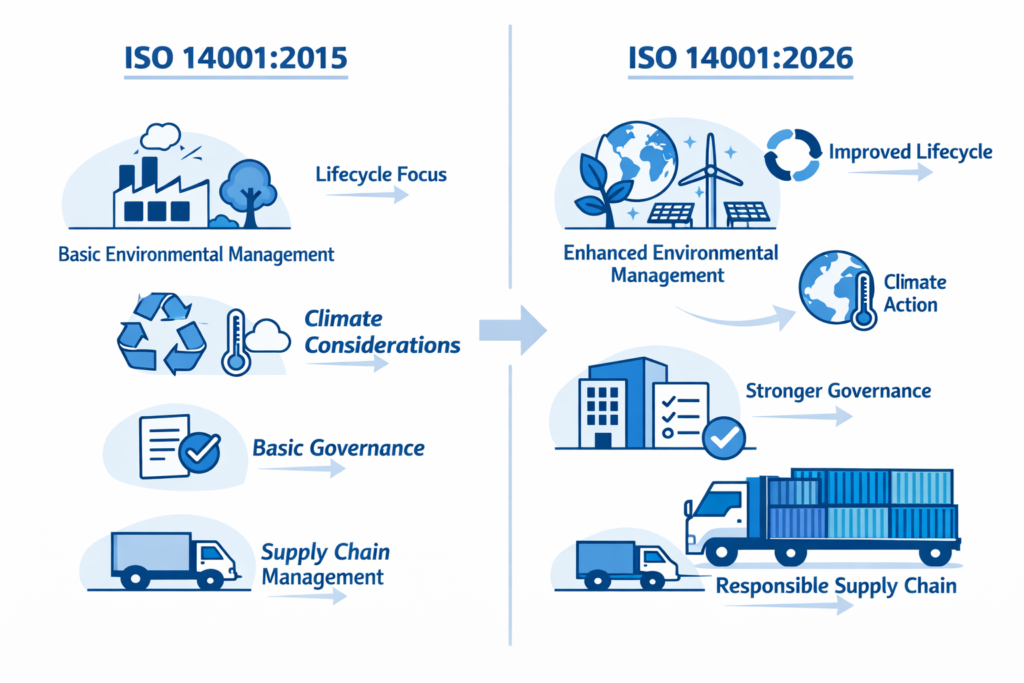
The Final Draft International Standard (FDIS) for ISO 14001:2026, expected April 2026, makes moderate but strategic updates to align with today’s environmental priorities. As DNV notes, the revision clarifies existing requirements and limits new ones, while fully adopting the current ISO high-level structure. Overall, organizations already certified to ISO 14001:2015 will see only incremental adjustments and should transition within an anticipated three-year period. Industry experts emphasize that the update “raises the bar” on climate, life-cycle and governance aspects without overhauling the core EMS cycle.
Structural and Clause Organization Changes
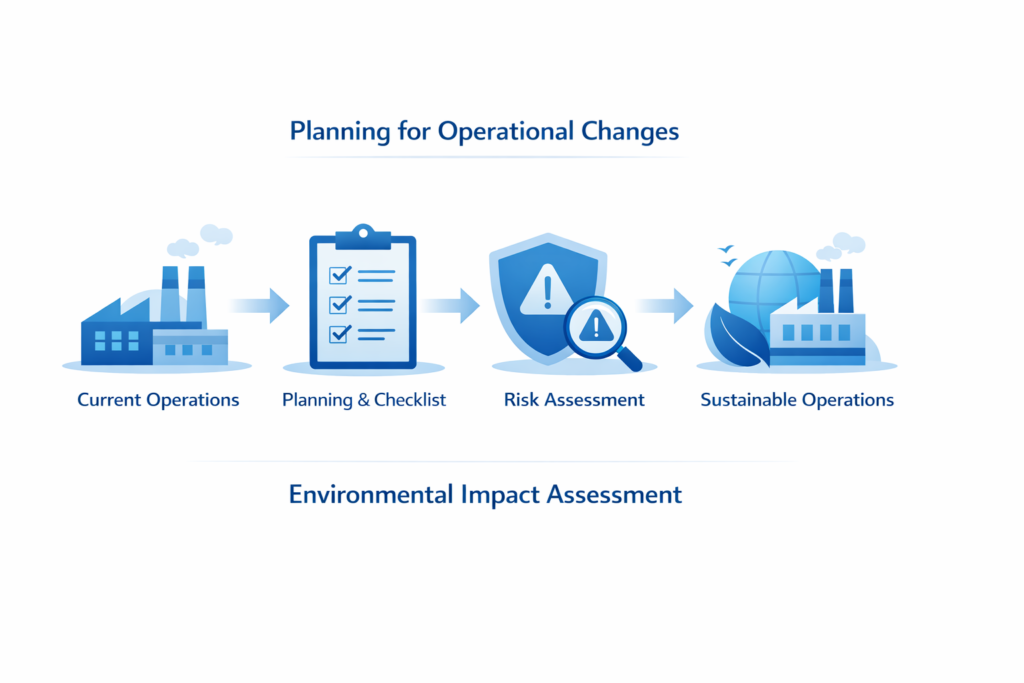
New Change-Management Clause (6.3): A new clause on “Planning and Managing Change” requires a structured, documented approach before significant operational changes (e.g. new processes, sites, products) to assess environmental impacts and controls. Emergency situations are now explicitly separated from other deviations.
Reorganized Risk and Planning (Clause 6): Clause 6.1 is split into subclauses for clarity. Text from “General” (6.1.1) is moved to a new 6.1.4 “Risks and Opportunities”, and “Planning actions” becomes 6.1.5. This aligns identified environmental aspects and compliance obligations directly with defined actions and outcomes. Standalone definitions of “risk” were removed to avoid parallel frameworks.
Improvement Clause (10) Consolidation: Clause 10 is renumbered and simplified. Former Clause 10.1 content is merged into 10.2/10.3, streamlining nonconformity and corrective action processes and explicitly linking improvement to management review findings.
Clause 8 (Operations) Extended: Operational planning and control (Clause 8.1) is broadened from controlling “outsourced processes” to all “externally provided processes, products and services”, explicitly covering contractors, suppliers and outsourced activities. Supplier management and value-chain controls are thus brought firmly into the EMS scope.
Annex SL Alignment: All clauses are reworded or indexed to match the latest Harmonized Structure (Annex SL). Documented information requirements are standardized (e.g. “available as documented information” replaces various terms for records). As one source observes, the changes improve “traceability and accountability” without altering fundamental intent.
Enhanced Environmental Context & Life-Cycle Focus (Clause 4)
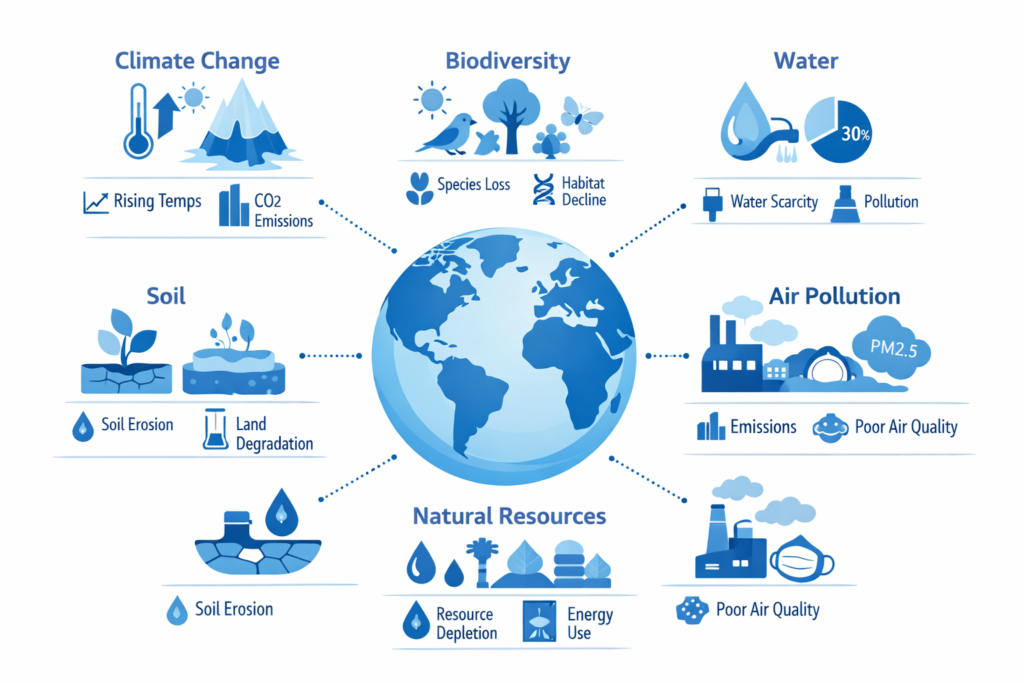
Broader Context Factors: Clause 4.1 now explicitly requires assessing a wider range of environmental conditions. In addition to climate change, organizations must consider biodiversity/ecosystem health, pollution levels (air, water, soil), natural resource availability, etc. in their context analysis. This embeds systemic environmental risk and dependency into the EMS rather than a narrow, site-based view.
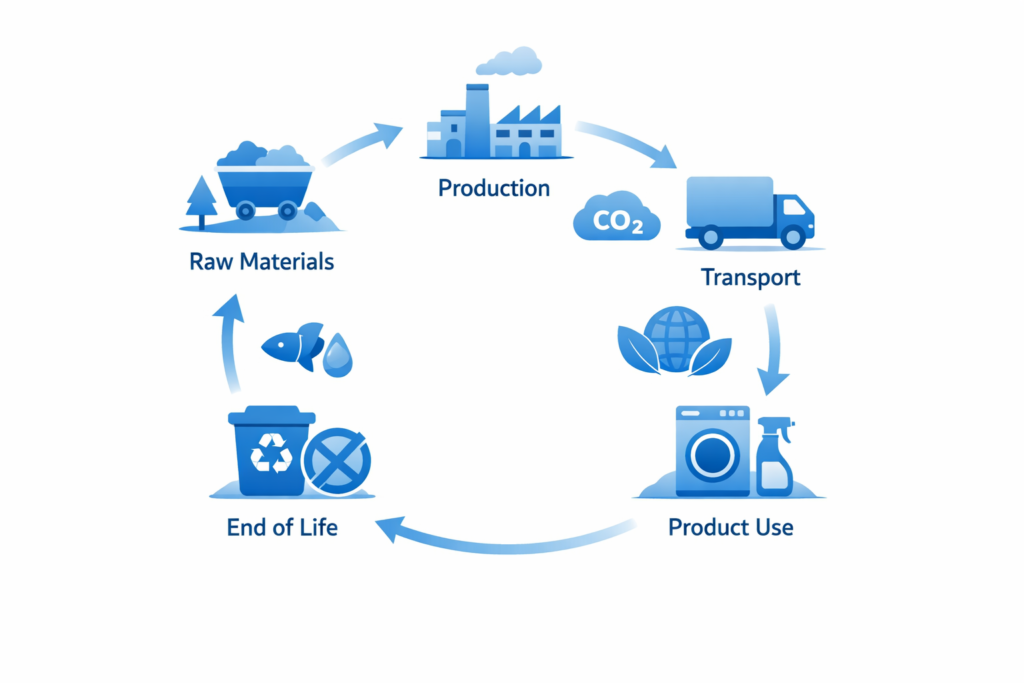
Life-Cycle Perspective: A new note in Clause 6.1.2 emphasizes life-cycle impacts of environmental aspects. The FDIS requires demonstrating how life-cycle thinking informs design, procurement, manufacturing, use and end-of-life stages. The organization’s EMS scope must explicitly reflect life-cycle considerations, ensuring “upstream and downstream” impacts (suppliers, products in use, disposal) are managed. In practice, this means showing influence beyond facility boundaries, e.g. by design choices, supplier criteria and customer information.
Leadership and Governance (Clause 5)
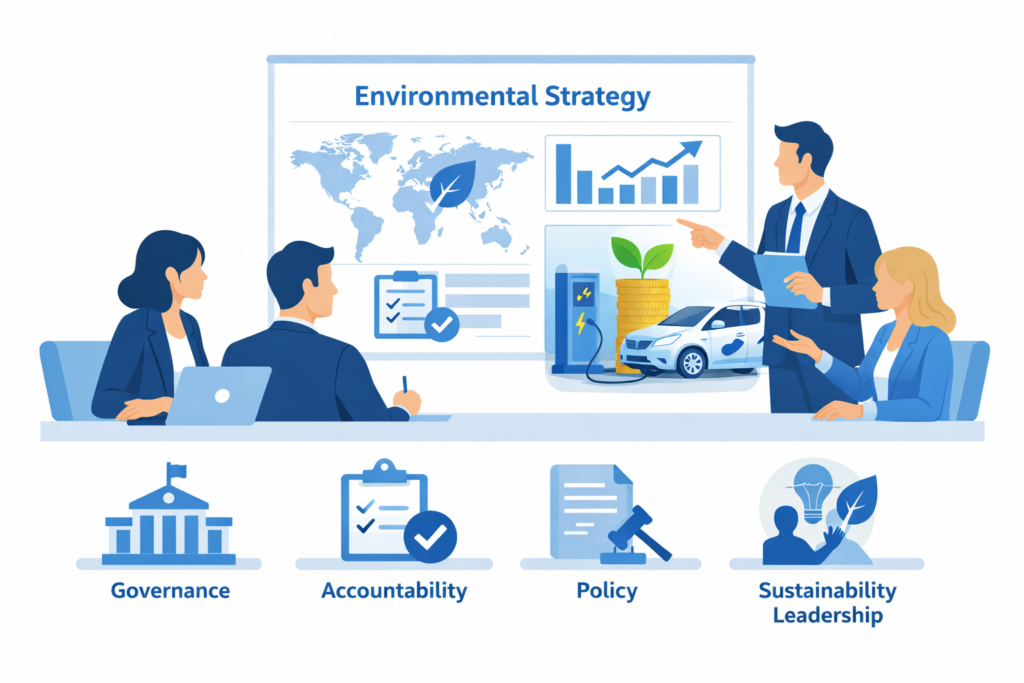
- Top-Management Accountability: Clause 5.1 reinforces that environmental management cannot be delegated away from senior leadership. Top management must demonstrate leadership by integrating EMS requirements into strategic direction and core processes. They have non‑delegable accountability for EMS performance, including setting objectives aligned with strategy and actively promoting continual improvement. Policies are expected to emphasize natural resource conservation, pollution prevention and ecosystem protection more explicitly.
Communication and Culture: Leadership roles around environmental culture, awareness and communication are clarified. For example, top management must ensure all levels of the organization are aware of their EMS roles and the consequences of non‑conformance. External communication requirements are heightened, aiming not just at compliance but transparent, outcome-based performance reporting throughout the value chain (per Core Business Solutions commentary).
Planning, Risk and Change Management (Clause 6)
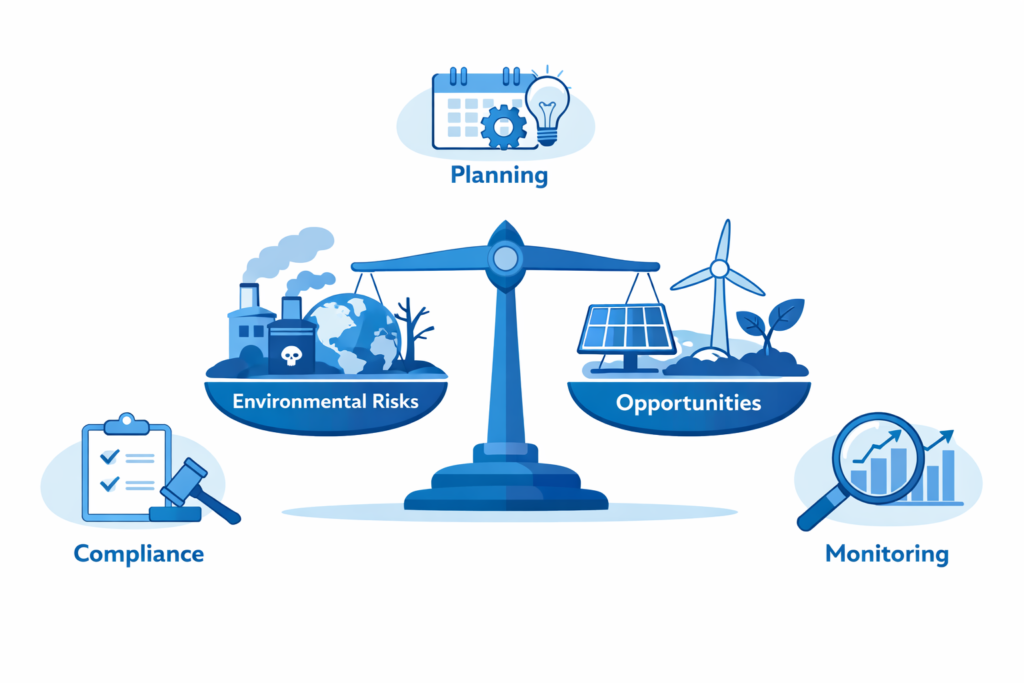
- Risk/Opportunity Clarification: The planning clause has been sharpened. Organizations must frame environmental risks and opportunities explicitly in relation to identified environmental aspects, compliance obligations and context. The FDIS removed redundant risk definitions and clarifies that actions should address “risks that can have an undesirable effect” and “opportunities that can have a desirable effect”. In effect, there is now a clear line of sight from aspect/obligation to specific planned actions and measurable outcomes.
- Documented Planning: The standard now emphasizes that planning outputs (objectives, action plans, indicators) must be documented as EMS requirements. Internal audit and management review clauses are more precise: audits must specify objectives as well as scope/criteria, and reviews are reorganized into inputs, processes and results subclauses. This tightens how organizations demonstrate planning rigor.
Change Management (New Clause 6.3): As noted, all EMS-relevant changes (new equipment, materials, suppliers, sites, regulations, etc.) must be planned and controlled to maintain intended outcomes. Prior to implementation, organizations must evaluate environmental impacts and define controls and responsibilities, keeping evidence of this analysis. This addresses a historical gap by formally linking change processes (e.g. production changes, process improvements) with EMS controls.
Operations & Supply Chain Controls (Clause 8)
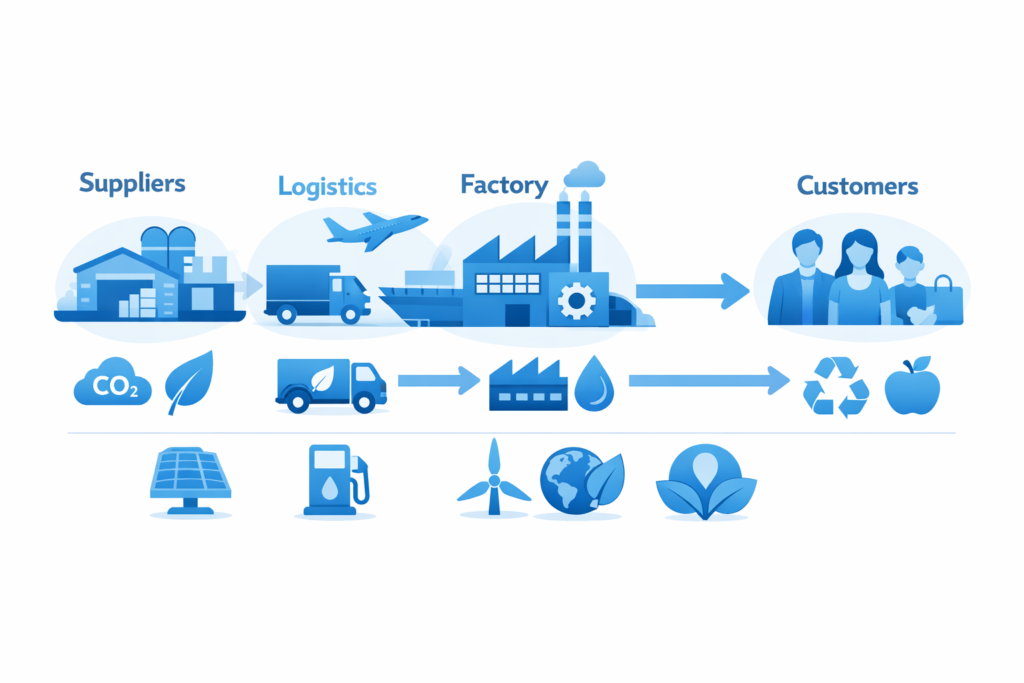
- Supply Chain Oversight: Building on ISO 14001:2015’s mention of outsourcing, Clause 8.1 now explicitly includes all “externally provided processes, products and services”. This language explicitly brings suppliers and contractors under EMS controls. Organizations must extend operational control mechanisms (selection criteria, contracts, audits) beyond their own operations to key upstream and downstream partners.
Emergency Preparedness: Emergency planning (Clause 8.2) is updated to align with the refreshed risk approach. Emergencies are treated as separate from other deviations, and preparedness must be coordinated with new risk management findings.
Documentation of Controls: All operational controls (processes, procedures, criteria) should be documented as “available as documented information” (the new term for mandatory records). This ensures that critical procedures (e.g. waste handling, spill response) are consistently maintained and accessible.
Terminology and Guidance Updates
- Standardized Language: Throughout the FDIS, terminology is modernized for consistency and integration. For instance, “fulfil (legal) obligations” has been replaced by “meet compliance obligations”, and terms like “records” and “documents” are uniformly called “documented information.” These changes reduce ambiguity and align with other ISO standards (Annex SL).
Annex A Expanded: The informative guidance Annex A has been substantially revised and lengthened to help interpret the new/clarified requirements. It now includes practical examples and explanatory notes for clauses on context, risk, life-cycle and other topics. This improved guidance will aid auditors and organizations in consistent implementation.
Implementation & Compliance Guidance
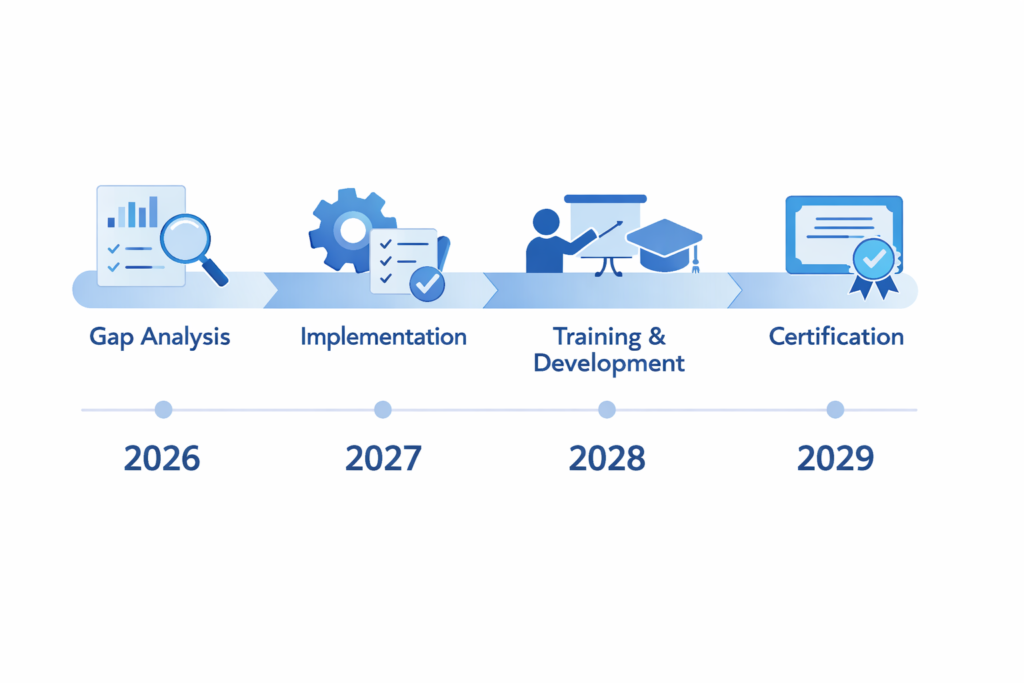
- Transition Period: ISO expects a three-year transition (to 2029) to migrate from ISO 14001:2015 to the new 2026 version. All certifications will need updating within that window. Bodies like DNV and SGS recommend organizations start gap analyses and training early, even before final publication.
- Expert Advice: Certification bodies emphasize that no major new requirements have been added – the EMS core cycle remains intact. However, they advise embedding climate, biodiversity and life-cycle considerations into existing processes now to smooth transition. For example, updating the environmental policy to stress resource conservation, and expanding stakeholder registers to include ecosystem impact issues. Training and internal audits should reflect the revised clause structure and new terminology.
Guidance on Compliance: New wording on compliance (e.g. “meet obligations”) signals a stronger orientation toward continual compliance management. Combined with the enhanced Annex guidance, organizations are urged to integrate the updated requirements into their strategic planning, communications and governance processes rather than treating them as a stand-alone checklist