Life Cycle Assessment (LCA) has become one of the most trusted scientific methods for understanding the environmental footprint of products, services, and systems. As organizations worldwide move toward sustainability, carbon transparency, and responsible supply chains, standards like ISO 14044 provide the technical backbone that ensures LCA studies are credible, consistent, and reliable.
This article explains ISO 14044 in a beginner-friendly yet research-oriented way. It will help you understand what the standard covers, why it matters, and how organizations use it to measure environmental impact across a product’s entire lifecycle.
Understanding the Scope of ISO 14044
What Does the Scope Mean?
The scope of a standard defines what it covers and what it helps organizations achieve. ISO 14044 specifically provides requirements and guidelines for conducting Life Cycle Assessment (LCA) in a structured and scientifically reliable way.
While ISO 14040 introduces the overall framework and principles of LCA, ISO 14044 goes deeper by explaining how to perform each stage of an LCA study, what rules must be followed, and how results should be evaluated and reported.
The Four Core Phases of Life Cycle Assessment
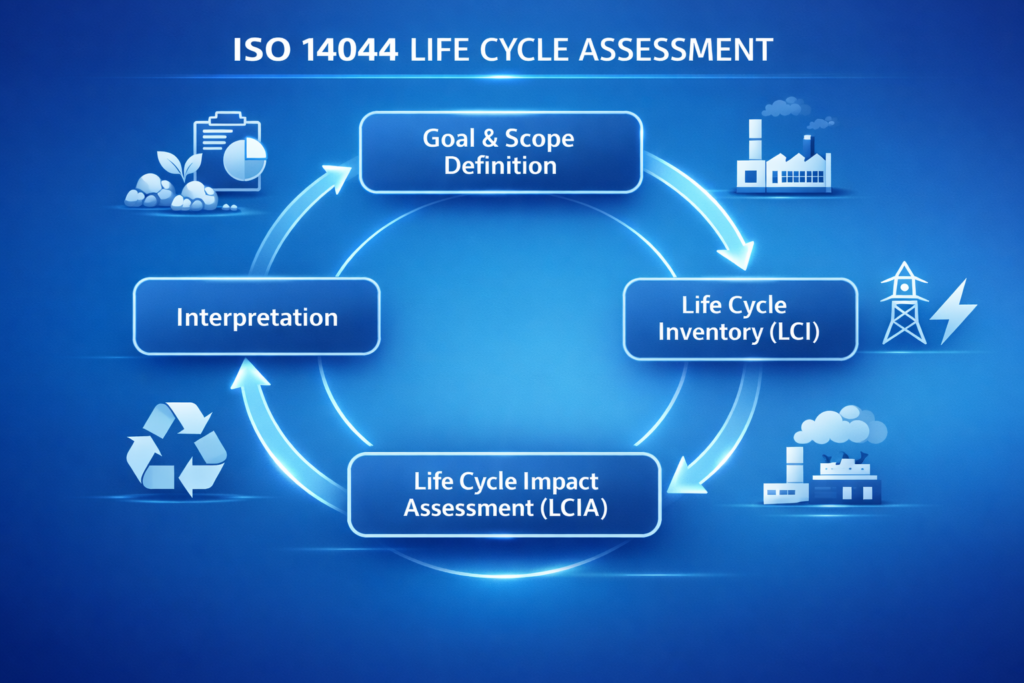
ISO 14044 divides LCA into four interconnected phases. Each phase builds upon the previous one and influences the final results.
1. Goal and Scope Definition
This phase establishes the foundation of the entire LCA study. Organizations define why they are conducting the assessment and what exactly they want to evaluate.
This stage typically includes:
The purpose of the study
The product, service, or system being analyzed
The level of detail required
The intended audience for the results
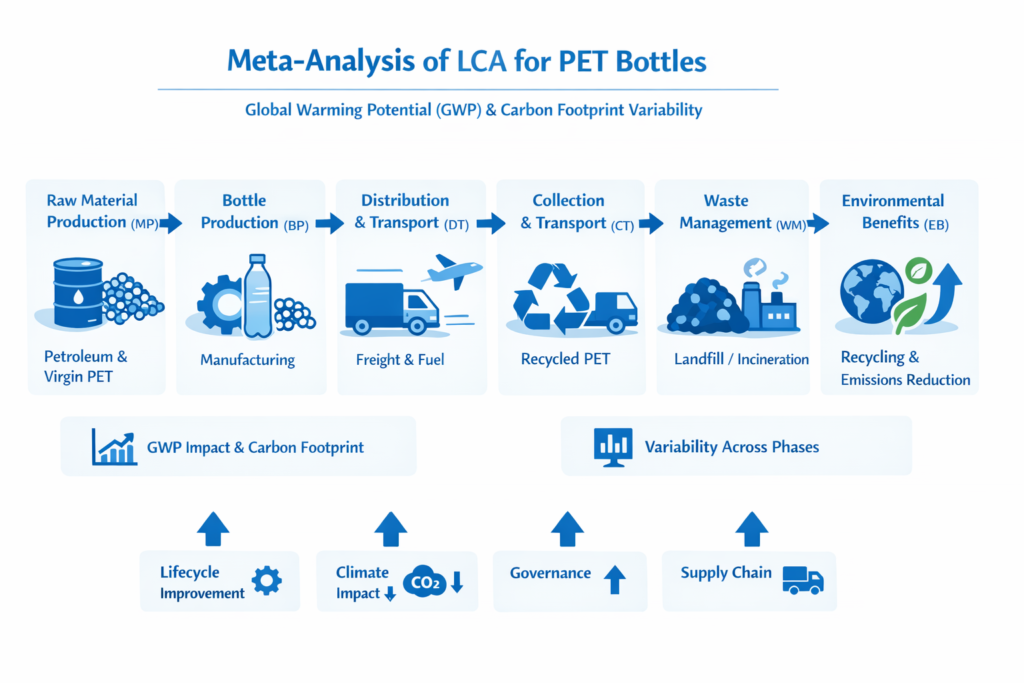
For example, a beverage company may conduct an LCA to compare the environmental impacts of plastic bottles and glass bottles. The goal could be identifying which packaging material produces lower carbon emissions and resource consumption.
Why this phase matters:
If the goal or system boundaries are unclear, the entire study may produce misleading results.
2. Life Cycle Inventory Analysis (LCI)
The Life Cycle Inventory phase focuses on collecting measurable data related to the product system. This includes tracking all resources entering the system and all environmental outputs leaving it.
Typical inputs include:
Raw materials
Energy consumption
Water usage
Typical outputs include:
Greenhouse gas emissions
Waste generation
Wastewater discharge
By-products
Consider the production of a cotton T-shirt. The inventory stage would include inputs such as cotton cultivation, electricity for manufacturing, water used during dyeing, and chemicals applied during processing. Outputs might include wastewater, fabric waste, and carbon emissions from energy use.
Why this phase matters:
LCI forms the data backbone of LCA. The accuracy and quality of collected data directly influence environmental impact calculations.
3. Life Cycle Impact Assessment (LCIA)
Once inventory data is collected, LCIA evaluates how these inputs and outputs affect the environment. This stage translates raw data into measurable environmental impacts.
Common impact categories include:
Climate change
Water pollution
Resource depletion
Human health impact
Ecosystem damage
For instance, electricity used during textile manufacturing may result in carbon dioxide emissions if generated from fossil fuels. These emissions contribute to climate change and can be quantified during LCIA.
Why this phase matters:
LCIA converts technical data into meaningful environmental indicators that decision-makers can understand and act upon.
4. Life Cycle Interpretation
The interpretation phase analyzes the results generated during inventory and impact assessment. It helps organizations identify environmental hotspots and improvement opportunities.
This phase involves:
Identifying major environmental contributors
Evaluating data quality and consistency
Making sustainability recommendations
For example, if dyeing processes consume the majority of water during textile manufacturing, a company may adopt low-water or eco-friendly dyeing technologies to reduce environmental impact.
Why this phase matters:
Interpretation ensures that LCA is not just a data exercise but a decision-making tool.
Reporting, Review, and Transparency in LCA
ISO 14044 emphasizes transparency and credibility in LCA results. Organizations must clearly document methodologies, assumptions, and limitations of their studies.
In many cases, independent external experts conduct critical reviews to verify that LCA studies follow ISO standards and produce unbiased results.
Transparent reporting builds trust among stakeholders, including regulators, investors, customers, and sustainability auditors.
Understanding the Limitations of LCA
Although LCA is one of the most advanced environmental evaluation methods, it has certain limitations:
Limited availability of reliable supply chain data
Need for assumptions during modeling
Complexity of global production networks
Variation in emission factors across regions
Recognizing these limitations helps organizations interpret results responsibly rather than treating them as absolute measurements.
How LCA Phases Interact With Each Other
LCA is not a strictly linear process. The four phases continuously interact with each other.
For example, if new data becomes available during the inventory phase, the environmental impact results may change. This could require revisiting the goal, scope, or interpretation stages.
This iterative nature improves the accuracy and reliability of LCA studies.
The Role of Value Choices and Assumptions in LCA
Certain LCA decisions involve expert judgment. For example:
Selecting which environmental impacts to prioritize
Choosing system boundaries
Defining data cut-off criteria
These choices must be documented transparently because they influence final results and stakeholder interpretation.
What ISO 14044 Does Not Cover
ISO 14044 focuses on how to conduct LCA studies, but it does not:
Mandate how organizations must use LCA results for business decisions
Provide legal certification requirements
Force companies to adopt specific sustainability targets
This distinction ensures flexibility for organizations while maintaining scientific consistency in assessment methods.
Normative Reference: The Relationship Between ISO 14044 and ISO 14040
ISO 14044 relies heavily on another foundational standard:
ISO 14040 establishes the principles and overall framework of LCA
ISO 14044 provides detailed operational requirements and technical guidance
Together, these standards create a complete methodology for environmental life cycle evaluation.
Essential Life Cycle Assessment Terminology
Understanding LCA requires familiarity with specific technical terms that define how environmental assessments are structured.
Life Cycle
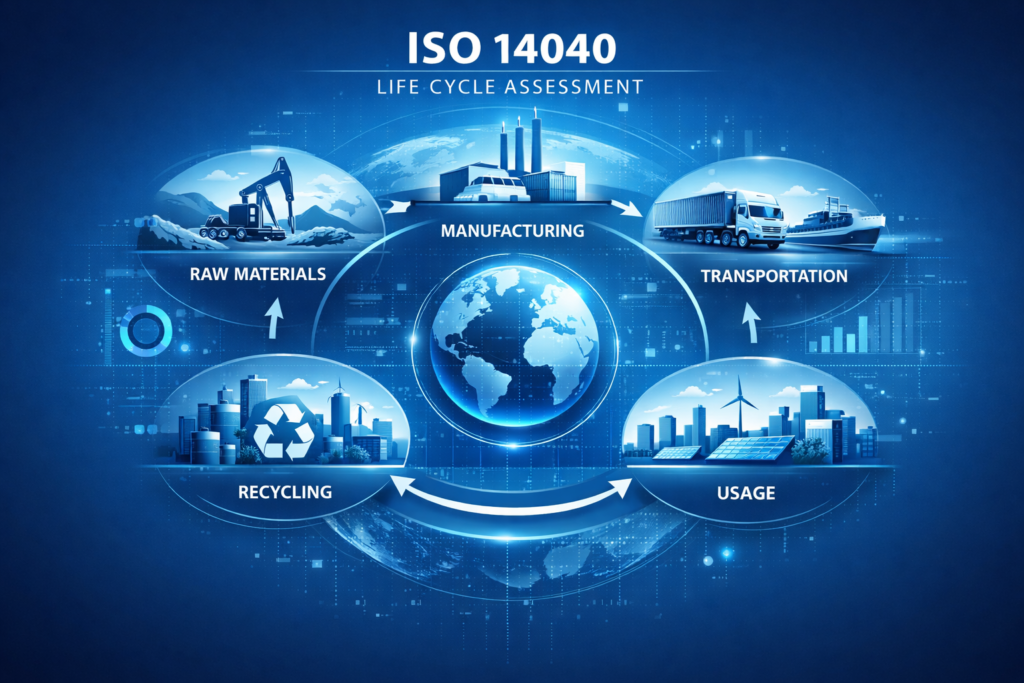
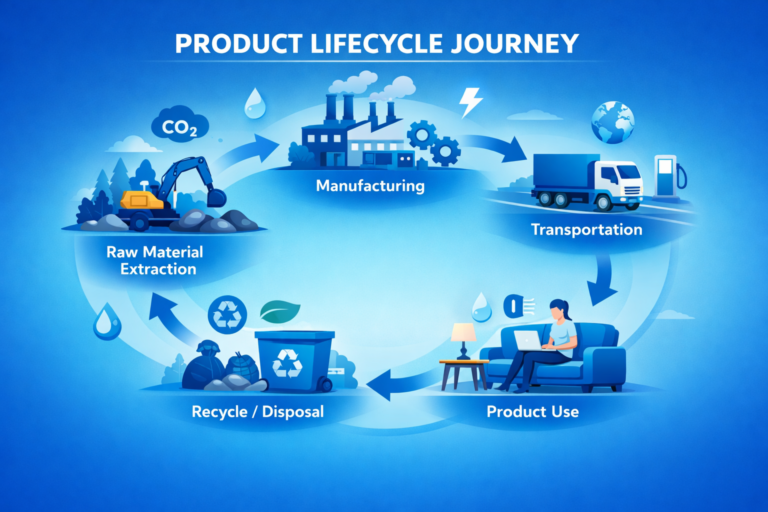
A life cycle represents the entire journey of a product, starting from raw material extraction to manufacturing, usage, and final disposal or recycling.
For example, a mobile phone life cycle includes metal mining, component manufacturing, product assembly, consumer usage, and electronic waste disposal.
Life Cycle Assessment (LCA)
LCA is a systematic method used to measure environmental impacts throughout the complete life cycle of a product or service.
Life Cycle Inventory (LCI)
LCI involves collecting quantitative data about resource consumption and environmental emissions across each stage of production.
Life Cycle Impact Assessment (LCIA)
LCIA evaluates environmental damage caused by inventory data using scientific models and impact categories.
Life Cycle Interpretation
This stage analyzes results to identify environmental risks and sustainability improvement opportunities.
Functional Unit
The functional unit provides a standardized measurement for comparison. For example, evaluating environmental impact per 1 kilogram of packaged rice delivered to a consumer allows fair comparison between different production methods.
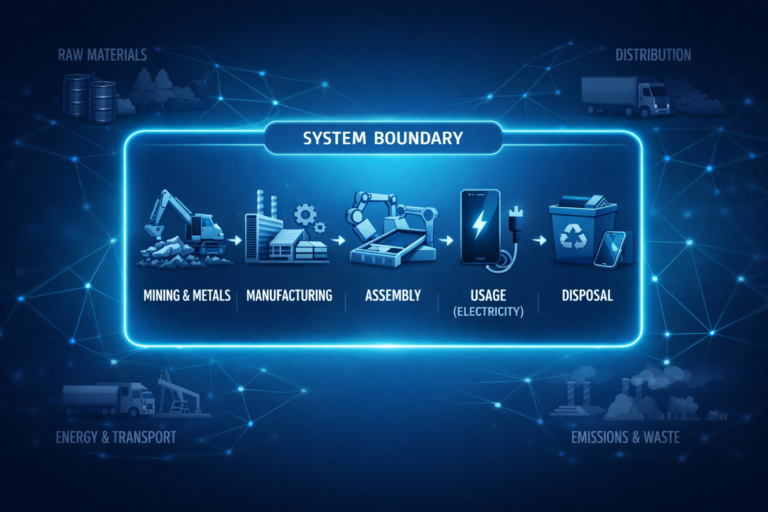
System Boundary
The system boundary defines which processes are included or excluded in an LCA study. For instance, transportation emissions may or may not be included depending on study objectives.
Allocation
Allocation distributes environmental impacts among multiple products generated from the same process. For example, dairy production simultaneously produces milk, butter, and cream, requiring impact distribution across products.
Data Quality and Uncertainty Analysis
Data quality determines the reliability of LCA results. Uncertainty analysis evaluates confidence levels by testing how assumptions or variable changes influence results.
Comparative Assertion
Comparative assertions involve environmental claims comparing two products, such as stating that paper bags are more sustainable than plastic bags. ISO 14044 requires strict transparency and external review for such claims.
Real-World Example: Electric Vehicle Life Cycle Assessment
Consider an LCA comparing electric vehicles (EVs) and petrol-powered cars.
Goal: Determine which vehicle type has lower environmental impact
Inventory: Evaluate battery production, fuel consumption, and electricity usage
Impact Assessment: Measure emissions generated during electricity production and fuel combustion
Interpretation: EVs may show lower lifecycle emissions when powered by renewable energy
Reporting: Results are published in sustainability or environmental disclosure reports
This example highlights how LCA supports strategic environmental decision-making in emerging technologies.
Why ISO 14044 Matters in Modern Sustainability Strategies
ISO 14044 provides organizations with a structured, credible, and internationally accepted method to measure environmental impact. It helps businesses:
Improve sustainability decision-making
Strengthen regulatory compliance
Increase transparency in ESG reporting
Identify supply chain environmental hotspots
Support product innovation and eco-design
As sustainability reporting becomes mandatory across many global markets, understanding and applying ISO 14044 is becoming increasingly important for organizations across industries.
Methodological Framework for Life Cycle Assessment (LCA): A Step-by-Step Guide Based on ISO 14044
As sustainability reporting and environmental transparency become essential for modern businesses, Life Cycle Assessment (LCA) is increasingly used as a scientific tool to measure environmental impacts across product lifecycles. However, conducting an LCA requires a structured and standardized methodology to ensure results are credible, comparable, and reliable.
ISO 14044 provides this methodological framework. It defines how organizations should plan, collect, analyze, and interpret environmental data when performing an LCA study.
This section explains the step-by-step scientific framework of LCA, while keeping the explanation beginner-friendly and practical for industry application.
General Requirements of LCA Methodology
ISO 14044 establishes foundational rules that every LCA study must follow to maintain consistency and scientific validity.
The Four Mandatory Phases of LCA
Every Life Cycle Assessment must include the following phases:
Goal and Scope Definition – Defines why the LCA is conducted and what will be studied.
Life Cycle Inventory Analysis (LCI) – Collects and quantifies data about resource use and emissions.
Life Cycle Impact Assessment (LCIA) – Evaluates environmental impacts based on collected data.
Interpretation – Analyzes results to support environmental decision-making.
These phases are interconnected and iterative, meaning results from later stages may require revisiting earlier stages to refine the study.
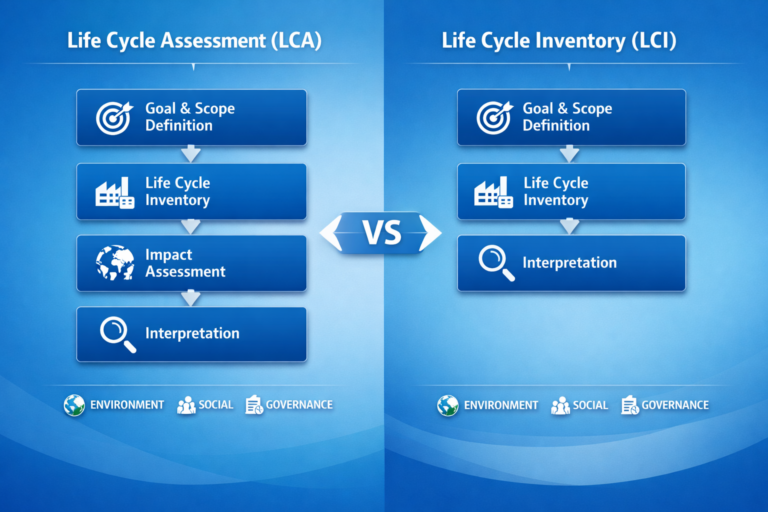
Special Case: Life Cycle Inventory (LCI) Studies
ISO 14044 also recognizes studies that focus only on inventory data. These include:
Goal and scope definition
Inventory data collection and analysis
Interpretation
However, LCI studies do not include environmental impact assessment, which creates important restrictions.
Organizations cannot use LCI studies alone to publicly claim environmental superiority between products. For example, simply comparing emission quantities without analyzing environmental impacts does not provide sufficient scientific evidence to declare one product more sustainable than another.
Why LCA Results Cannot Be Reduced to a Single Score
Environmental impacts occur across multiple dimensions such as climate change, water pollution, and resource depletion. Because these impacts are scientifically different, ISO 14044 discourages reducing results into a single universal sustainability score.
For instance, one product may generate lower carbon emissions but cause higher water pollution. Combining these impacts into one number can lead to misleading conclusions.
Goal and Scope Definition: The Foundation of LCA
The goal and scope phase determines how the entire LCA study will be designed and conducted.
Defining the Goal of an LCA Study
Organizations must clearly explain four critical aspects:
Intended Application
Describes how LCA results will be used, such as:
Product design improvement
Sustainability reporting
Policy development
Supplier selection
Reason for Conducting the Study
Explains the motivation behind the LCA, which may include:
Reducing carbon emissions
Meeting ESG reporting requirements
Improving supply chain transparency
Intended Audience
Defines stakeholders who will use or evaluate the results, including:
Customers
Investors
Regulatory authorities
Internal management
Comparative Assertions
Specifies whether results will be used for public product comparisons, such as eco-friendly marketing claims.
Defining the Scope of an LCA Study
The scope determines how the study will be conducted and what boundaries it will include. ISO 14044 requires the scope to clearly define:
Product system being analyzed
Function of the product or service
Functional unit for comparison
System boundary
Allocation procedures
Impact assessment methods
Data requirements and quality standards
Assumptions and limitations
Critical review requirements
Reporting format
Although scope may evolve during the study, all changes must be documented to maintain transparency.
Understanding Function and Functional Unit
The function describes what purpose a product serves, while the functional unit provides a standardized measurement that allows fair comparison.
For example, when comparing paper bags and plastic bags, comparing individual bags would be inaccurate. Instead, comparing the number of bags required to carry 10 kilograms of groceries provides a meaningful basis for comparison.
The reference flow then defines the quantity of materials required to fulfill that functional unit.
System Boundary Definition
System boundaries determine which processes are included in the LCA study. These typically include:
Raw material extraction
Manufacturing and processing
Transportation and distribution
Product use phase
End-of-life disposal or recycling
Processes may be excluded only if they do not significantly influence the final results.
Suggested Visual Diagram
A system boundary diagram showing lifecycle stages from raw material extraction to disposal can help readers visualize how LCA covers the entire product journey.
Cut-Off Criteria for Data Selection
Cut-off criteria help determine which inputs and outputs should be included in the study. ISO 14044 defines three common approaches:
Mass-based criteria: Includes materials with significant weight contribution.
Energy-based criteria: Includes processes consuming substantial energy.
Environmental significance criteria: Includes processes with major environmental impacts, even if they are small in quantity.
All cut-off decisions must be justified and documented.
Impact Assessment Methodology Selection
Organizations must define environmental impact categories and scientific models used to analyze environmental damage. Common categories include:
Climate change
Water pollution
Ozone depletion
Human toxicity
Resource depletion
Data Types and Sources
LCA data may be collected from:
Manufacturing facilities
Supplier disclosures
Research publications
Industry databases
Engineering estimates or models
Typical data includes resource inputs, emissions, waste generation, and other environmental indicators such as land use and noise pollution.
Ensuring Data Quality
ISO 14044 requires strict data quality evaluation to maintain reliability. Important criteria include:
Time coverage and data recency
Geographic relevance
Technology representativeness
Precision and completeness
Consistency of methodology
Reproducibility of results
Transparency of data sources
Uncertainty analysis
When data is missing, organizations may use estimates, substitute data from similar processes, or apply justified assumptions.
Requirements for Comparing Product Systems
Comparative LCAs must follow strict methodological consistency. Products being compared must share:
The same functional unit
Identical system boundaries
Equivalent data quality
Uniform allocation procedures
Public comparisons additionally require impact assessment and independent critical review.
Life Cycle Inventory Analysis (LCI): Data Collection and Calculation
The LCI phase translates study design into measurable environmental data. It involves collecting, validating, and organizing data across all processes within the defined system boundary.
Data Collection in LCI
Data must be gathered for each individual unit process and include:
Inputs
Raw materials
Energy consumption
Water use
Supporting materials
Outputs
Products and co-products
Waste generation
Environmental emissions
Data may be obtained through direct measurement, calculations, or estimation models. All data sources must be properly documented and referenced.
Suggested Visual Diagram
A process flow diagram illustrating unit processes and material flow between them can help explain how inventory data is structured.
Maintaining Data Consistency
To ensure reliability, organizations should:
Develop detailed process flow diagrams
Describe each unit process thoroughly
Record operating conditions such as temperature and energy efficiency
Use standardized measurement units
Document calculation methods and assumptions
Processing and Calculating LCI Data
Once data is collected, it must be processed using standardized calculation methods. These calculations must be transparent, documented, and consistently applied throughout the study.
Data validation is performed using methods such as:
Mass balance verification
Energy balance verification
Comparison with industry benchmarks
Linking Data to Functional Units
All collected data must be converted and aligned with the functional unit selected during the scope phase. For example, if production data is collected for 1,000 T-shirts, it must be normalized to represent the environmental impact of producing a single T-shirt.
Refining System Boundaries Through Sensitivity Analysis
LCA studies often evolve as data improves. Sensitivity analysis helps determine whether certain processes can be excluded or additional processes should be included based on environmental significance.
Allocation: Distributing Environmental Impacts
Allocation becomes necessary when a single process produces multiple products.
ISO 14044 recommends a stepwise approach:
Step 1: Avoid Allocation
Where possible, divide processes into sub-processes or expand system boundaries to reduce allocation complexity.
Step 2: Use Physical Relationships
Impacts may be allocated based on mass, energy content, or chemical composition.
Step 3: Use Economic Value
If physical relationships are unclear, impacts may be distributed based on market value or revenue contribution.
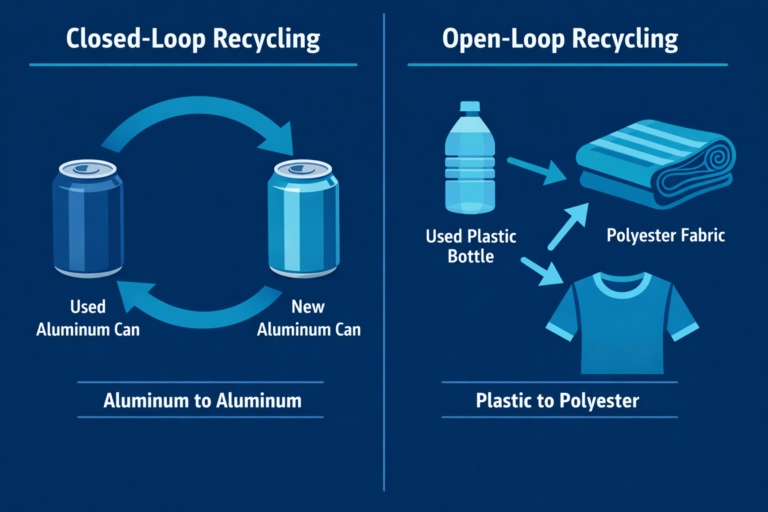
Allocation in Recycling Systems
Recycling introduces additional complexity because environmental impacts may span multiple product lifecycles.
Closed-loop recycling: Materials are reused within the same product system, often avoiding allocation.
Open-loop recycling: Materials are reused in different product systems, requiring allocation based on physical or economic factors.
Life Cycle Impact Assessment (LCIA): Translating Data into Environmental Meaning
LCIA converts inventory data into environmental impact indicators, helping organizations understand the real significance of emissions and resource consumption.
Mandatory Elements of LCIA
Selection of Impact Categories and Models
Organizations must select scientifically valid environmental categories and corresponding measurement indicators.
Classification
Emissions are assigned to relevant environmental impact categories.
Characterization
Emissions are converted into comparable environmental indicators using characterization factors, such as converting methane emissions into carbon dioxide equivalents.
Optional Elements of LCIA
Optional elements enhance interpretation but are not mandatory:
Normalization: Compares impact results with regional or global reference values.
Grouping: Organizes impact categories based on geographical or priority classification.
Weighting: Assigns importance to different impact categories, though weighting cannot be used for public product comparisons due to subjectivity.
LCIA Data Quality and Reliability Analysis
LCIA results are further validated through:
Pareto analysis to identify major environmental contributors
Uncertainty analysis to evaluate data reliability
Sensitivity analysis to test how assumptions influence results
Special Requirements for Public Product Comparisons
When LCA results are used for public environmental claims or eco-labeling, ISO 14044 imposes strict requirements. Studies must include multiple impact categories, transparent methodology, and independent expert review.
Weighting methods cannot be used in public comparisons because they rely on subjective value judgments.
Limitations of Life Cycle Impact Assessment
While LCIA provides valuable environmental indicators, it has certain limitations:
It estimates potential environmental impacts rather than predicting exact environmental damage
Results depend on scientific models and assumptions
Data uncertainty may influence conclusions
Recognizing these limitations ensures responsible interpretation of LCA results.
Why the Methodological Framework of ISO 14044 Matters
The methodological framework defined in ISO 14044 ensures that LCA studies are scientifically credible, comparable across industries, and transparent for stakeholders. It supports organizations in:
Designing sustainable products
Improving supply chain transparency
Strengthening ESG and regulatory reporting
Identifying environmental hotspots
Supporting data-driven climate strategies
As sustainability transitions from voluntary initiatives to regulatory requirements, understanding this structured methodology is becoming essential for businesses, policymakers, and environmental researchers.
ISO 14044 Reporting Requirements (Clause 5): How to Communicate LCA Results Transparently and Credibly
Life Cycle Assessment (LCA) is only as valuable as the clarity and credibility of how its results are communicated. Even the most scientifically accurate environmental analysis can lead to poor decisions if reporting is unclear, biased, or lacks transparency.
ISO 14044 Clause 5 focuses on reporting requirements, ensuring that LCA findings are presented in a way that stakeholders can understand, trust, and use for decision-making. This section explains how organizations should document, structure, and communicate LCA results while maintaining scientific integrity.
General Reporting Requirements and Transparency
Planning the LCA Report
ISO 14044 emphasizes that reporting is not an afterthought. The type, structure, and audience of the LCA report must be determined during the Goal and Scope Definition phase of the study.
The report must:
Present results clearly and objectively
Avoid selective or misleading interpretation
Explain methodologies, assumptions, and data sources
Highlight study limitations and uncertainties
Allow readers to understand environmental trade-offs
Support the intended application of the study
Why Transparent Reporting Matters
LCA reports influence multiple organizational decisions, including:
Sustainable product design
ESG and sustainability strategy development
Regulatory and compliance submissions
Environmental marketing and product claims
If reporting lacks transparency or contains bias, it can lead to incorrect sustainability decisions, regulatory risks, and loss of stakeholder trust.
Best Practices for Organizations
Organizations conducting LCA studies should:
Define the target report audience early in the study
Maintain clear documentation of all modelling decisions
Explain assumptions and data limitations openly
Provide sufficient detail for readers to understand conclusions
Common target audiences include internal management teams, regulators, investors, customers, and certification bodies.
Additional Reporting Requirements for Third-Party Communication
When LCA results are shared outside the organization, ISO 14044 introduces stricter reporting requirements to ensure external stakeholders can evaluate study credibility.
Organizations must document:
Scope Changes
Any modifications made to study boundaries, data selection, or modelling assumptions must be clearly explained. This ensures readers understand how the study evolved during analysis.
System Boundary Description
Reports must explain:
Which lifecycle stages were included or excluded
Input and output flows considered
Justification for inclusion or exclusion decisions
Unit Process Modelling
Each process within the product system must be described, including:
How the process was represented in the model
Allocation procedures used to distribute environmental impacts
Data Transparency
Organizations must disclose:
Data sources used
Selection criteria for data inclusion
Data quality requirements and evaluation methods
Impact Category Selection
Reports must justify why specific environmental impact categories were chosen and how they relate to the study goal.
Why These Requirements Matter
Third-party users such as regulators, certification agencies, and customers must be able to:
Trust LCA results
Understand methodological choices
Reproduce or verify analysis if necessary
Use of Graphical Presentation in LCA Reporting
ISO 14044 encourages the use of charts, graphs, and visual tools to improve understanding of environmental results. However, it warns that visualizations can unintentionally create misleading interpretations.
For example, bar charts comparing product impacts may visually exaggerate differences even when uncertainties exist or when impact categories are not directly comparable.
Best Practices for Visual Reporting
Organizations should:
Provide explanatory notes alongside visual data
Clearly communicate uncertainty ranges
Avoid oversimplifying environmental performance into visual rankings
Additional Requirements for Third-Party LCA Reports
Whenever LCA results are shared externally, the report must contain detailed structured information.
General Study Information
The report must identify:
Study commissioner
LCA practitioner or research team
Report publication date
Statement confirming ISO compliance
Study Goal Description
The report must explain:
Purpose of the study
Intended application of results
Target audience
Whether results will be used for public product comparisons
Scope Description
Product or Service Function
The report must describe the role and performance of the studied product or service.
Functional Unit
The functional unit must be clearly defined and aligned with the study goal. It serves as the standardized comparison basis for environmental performance.
System Boundary Explanation
Reports must describe:
Lifecycle stages included and excluded
Energy assumptions such as electricity generation mix
Material and resource flows
Cut-Off Criteria Documentation
Reports must explain:
Which inputs or outputs were excluded
Environmental significance of excluded data
Potential influence of exclusions on results
Reporting Life Cycle Inventory (LCI) Results
The LCI section of the report must include detailed information about data collection and processing.
Data Collection Documentation
Organizations must describe:
Data collection methods
Primary and secondary data sources
Calculation procedures used
Process Description
Reports must provide qualitative and quantitative explanations of each unit process involved in the product system.
Data Validation
The report must explain:
Data quality evaluation methods
Techniques used to handle missing or incomplete data
Sensitivity Analysis
Sensitivity analysis must demonstrate how changes in system boundaries, assumptions, or data influence study results.
Allocation Procedures
Organizations must justify allocation methods used when environmental impacts are shared among multiple products.
Reporting Life Cycle Impact Assessment (LCIA) Results
The LCIA reporting section must explain environmental impact evaluation methodology.
Impact Assessment Methodology
Reports must include:
Scientific models used
Characterization factors applied
Selected environmental impact categories and justification
Value Choices and Optional Elements
If normalization, grouping, or weighting methods are used, the report must clearly explain:
How these methods were applied
Justification for their use
Potential influence on final results
LCIA Limitations
Reports must clearly state that LCIA results represent environmental impact indicators, not direct predictions of actual environmental damage.
Requirements for New Impact Categories
If organizations introduce new environmental indicators or methodologies, they must provide scientific justification along with sensitivity and uncertainty analysis.
Reporting Life Cycle Interpretation
The interpretation section must summarize key study conclusions and provide decision-support insights.
Reports must include:
Final environmental results
Key assumptions and modelling choices
Identified limitations
Data quality evaluation
Expert judgments and value-based decisions
Reporting Critical Review Results
If a critical review is conducted, the report must include:
Reviewer identity and qualifications
Review findings and conclusions
Organization responses to reviewer recommendations
Critical reviews improve credibility, especially when LCA results are used publicly.
Reporting Requirements for Public Comparative Environmental Claims
When organizations publicly claim that one product is environmentally better than another, ISO 14044 introduces strict additional requirements.
Material and Energy Flow Justification
Reports must explain why specific flows were included or excluded from the study.
Data Quality Evaluation
Organizations must demonstrate reliability using criteria such as:
Precision
Completeness
Representativeness
Consistency
System Equivalence Demonstration
Comparative studies must prove that both products:
Perform the same function
Are evaluated under comparable conditions
Use equivalent modelling assumptions
Mandatory Critical Review
Public product comparisons require independent expert review to ensure scientific validity and fairness.
LCIA Completeness Evaluation
Organizations must demonstrate that environmental impact assessment covers all relevant environmental categories.
Scientific Validity of Environmental Indicators
Reports must justify why selected indicators accurately represent environmental impacts.
Sensitivity and Uncertainty Analysis
Organizations must show that comparative conclusions remain valid even when assumptions or data uncertainties change.
Significance of Differences
Reports must explain whether environmental performance differences between products are meaningful or negligible.
Special Considerations When Grouping Impact Categories
Grouping combines environmental impacts into broader classifications. When grouping is used, ISO requires organizations to report:
Methodology used for grouping
Explanation that grouping involves value judgments
Justification for grouping criteria
Disclaimer stating that ISO does not prescribe grouping methods
Responsibility for grouping decisions lies with the study commissioner rather than the ISO standard itself.
Why ISO 14044 Reporting Requirements Matter
Reporting requirements defined in ISO 14044 ensure that LCA studies remain transparent, reproducible, and scientifically credible. They help organizations:
Strengthen ESG and sustainability disclosures
Avoid misleading environmental claims
Support regulatory and certification compliance
Improve stakeholder trust and credibility
Enable evidence-based sustainability decision-making
As environmental transparency becomes a regulatory and competitive requirement, effective LCA reporting is becoming as important as conducting the assessment itself.
ISO 14044 – Critical Review (Clause 6): Ensuring Credibility and Scientific Integrity in Life Cycle Assessment
Life Cycle Assessment (LCA) is widely used to support environmental decision-making, product development, sustainability strategy, and public environmental communication. However, the reliability of LCA results depends heavily on the accuracy of methodology, quality of data, and transparency of reporting.
To ensure trust and credibility, ISO 14044 introduces the concept of a Critical Review, which acts as an independent evaluation of the LCA study. This clause focuses on validating whether the study follows scientific standards, applies correct methodologies, and presents results transparently.
In simple terms, a critical review ensures that LCA results are not only technically correct but also trustworthy for decision-making and public communication.
Understanding Critical Review in LCA
Purpose of Critical Review
A Critical Review is an independent quality assurance process designed to verify the reliability and credibility of an LCA study. It evaluates whether the study:
Follows ISO 14040 and ISO 14044 methodological requirements
Uses scientifically valid models and methods
Applies appropriate and reliable data
Provides transparent and consistent interpretation
Produces conclusions that accurately reflect study limitations
It can be understood as a combination of:
Audit process
Scientific peer review
Quality validation mechanism
This multi-layered verification ensures that environmental claims are based on robust and defendable scientific evidence.
Key Areas Verified During Critical Review
ISO 14044 specifies five major areas that reviewers must examine.
1. Compliance with ISO Methodology
Reviewers verify whether:
The LCA methodology aligns with ISO 14040 and ISO 14044
The goal and scope of the study are clearly defined
Life Cycle Inventory (LCI), Life Cycle Impact Assessment (LCIA), and interpretation phases are correctly implemented
This ensures that the LCA follows internationally accepted methodological frameworks.
2. Scientific and Technical Validity
The reviewer evaluates whether:
Environmental models used are scientifically acceptable
Impact assessment methods are technically appropriate
Calculations and modelling approaches are accurate
This stage ensures that results are scientifically sound and technically reliable.
3. Data Appropriateness and Reliability
Data quality is a critical component of LCA credibility. Reviewers examine:
Reliability of data sources
Reasonableness of assumptions and estimations
Alignment of data selection with study objectives
Poor data quality can significantly distort environmental conclusions, making this verification essential.
4. Interpretation Consistency
Reviewers confirm that:
Study conclusions reflect the actual results
Limitations and uncertainties are properly acknowledged
Environmental claims are not exaggerated or misrepresented
This helps prevent misleading sustainability claims.
5. Transparency and Report Clarity
Reviewers ensure that:
All assumptions, methods, and data sources are documented
The study is understandable and reproducible
Stakeholders can trace how results were derived
Transparency is fundamental to building stakeholder confidence.
Why Critical Review is Essential
Critical reviews play a major role in protecting environmental credibility. LCA results are often used for:
Public environmental product claims
Government policy development
Sustainability certifications
Product environmental comparisons
Without independent review, organizations risk publishing misleading or scientifically weak environmental statements, which can damage reputation and stakeholder trust.
When Critical Review Must Be Planned
ISO 14044 requires organizations to define:
The type of critical review
The scope and review methodology
These decisions must be made during the Goal and Scope Definition phase and documented clearly. Early planning ensures that the review process aligns with study objectives and stakeholder expectations.
Special Requirement for Public Comparative Claims
When LCA results are used to publicly compare products or services, ISO mandates a panel-based critical review. This ensures that comparisons are:
Scientifically valid
Fair and unbiased
Transparent to stakeholders
Such reviews reduce the risk of greenwashing and industry disputes.
Types of Critical Review in ISO 14044
ISO 14044 outlines three main review approaches depending on the purpose and audience of the LCA study.
Critical Review by Internal or External Expert
This review is conducted by a single independent expert, who may be:
An internal professional not involved in the study
An external independent reviewer
The key requirement is independence from the LCA execution process.
Report Requirements
The final LCA report must include:
Reviewer’s statement
Reviewer comments and observations
Practitioner responses to reviewer feedback
Typical Use Cases
This type of review is commonly used for:
Internal sustainability decision-making
Product redesign and innovation
Strategic environmental planning
Regulatory preparation
Example: Internal Product Improvement
An electronics manufacturer evaluating alternative materials for reducing product carbon footprint may conduct an LCA primarily for internal design improvement. In such cases, a single independent reviewer is generally sufficient.
Critical Review by Panel of Interested Parties
For studies with broader public or industry impact, ISO requires a multi-stakeholder panel review.
Panel Structure Requirements
The panel must include:
An independent external chairperson
At least three panel members
Experts representing relevant stakeholder groups
Possible panel members may include:
Government regulators
Environmental NGOs
Industry representatives
Scientific and technical experts
Competitor or affected industry stakeholders
Additional Expertise Requirement
When reviewing the LCIA phase, panel members must collectively have expertise in the environmental impact categories being evaluated. For example:
Climate scientists for climate change assessments
Toxicologists for human health impacts
Biodiversity experts for ecosystem assessments
Documentation Requirements
The LCA report must include:
Panel review statement
Detailed panel findings
Individual reviewer comments
Practitioner responses and revisions
When Panel Review Becomes Mandatory
Panel review is compulsory when LCA supports public comparative environmental claims.
Real-World Example: Electric Vehicle vs Petrol Vehicle
Scenario 1 – Internal Strategic Study
A vehicle manufacturer studies battery design improvements to reduce lifecycle emissions.
👉 External expert review is typically sufficient.
Scenario 2 – Public Environmental Claim
The company publicly states that:
“Electric vehicles generate 40% lower lifecycle emissions than petrol vehicles.”
👉 ISO requires a panel review, which may include:
Environmental NGOs
Automotive engineers
Government regulators
Climate science experts
This ensures the comparison is scientifically valid and publicly credible.
Comparing Critical Review Types
Review Type | Conducted By | Complexity Level | Typical Use Case |
Internal Expert Review | Independent internal staff | Low | Internal improvements |
External Expert Review | Independent external reviewer | Medium | External reporting or regulatory use |
Panel Review | Multiple independent stakeholders | High | Public comparative claims |
Key Principles Behind Critical Review
ISO 14044 establishes critical review as a mechanism to ensure:
Credibility of environmental results
Scientific integrity of LCA methodology
Transparency of environmental reporting
Stakeholder confidence in sustainability claims
Fair and unbiased product comparisons
These principles are essential for organizations aiming to demonstrate responsible environmental performance.
Conclusion
Building Credibility Through Transparent and Verified Life Cycle Assessment
Life Cycle Assessment has become a powerful tool for organizations seeking to understand and reduce their environmental impact across product and service life cycles. However, the value of LCA lies not only in performing environmental calculations but also in ensuring that results are communicated transparently, interpreted responsibly, and verified through structured quality assurance processes.
ISO 14044 plays a critical role in establishing this credibility by defining clear requirements for reporting and independent review. The reporting requirements outlined in Clause 5 ensure that LCA studies are documented with clarity, scientific integrity, and transparency, enabling stakeholders to understand methodologies, assumptions, and limitations. This structured reporting framework helps organizations support regulatory compliance, sustainability strategies, and responsible environmental communication.
Clause 6 further strengthens LCA reliability by introducing the critical review process. By requiring independent verification of methodology, data quality, and interpretation consistency, ISO ensures that LCA results remain scientifically robust and trustworthy. The availability of different review approaches, ranging from expert reviews to multi-stakeholder panel reviews, allows organizations to align verification rigor with the intended use of the study, particularly when environmental claims are communicated publicly.
Together, reporting and critical review requirements create a strong foundation for responsible environmental decision-making. They help organizations avoid misleading claims, improve stakeholder confidence, and support evidence-based sustainability strategies. As global sustainability regulations and disclosure expectations continue to expand, adherence to ISO 14044 provides organizations with a reliable framework for demonstrating environmental accountability and transparency.
Ultimately, ISO 14044 reinforces that Life Cycle Assessment is not only about measuring environmental impacts but also about ensuring that environmental information is communicated ethically, accurately, and credibly. Organizations that adopt these principles are better positioned to drive meaningful sustainability improvements and contribute to building a more transparent and responsible environmental future.