dk19is055

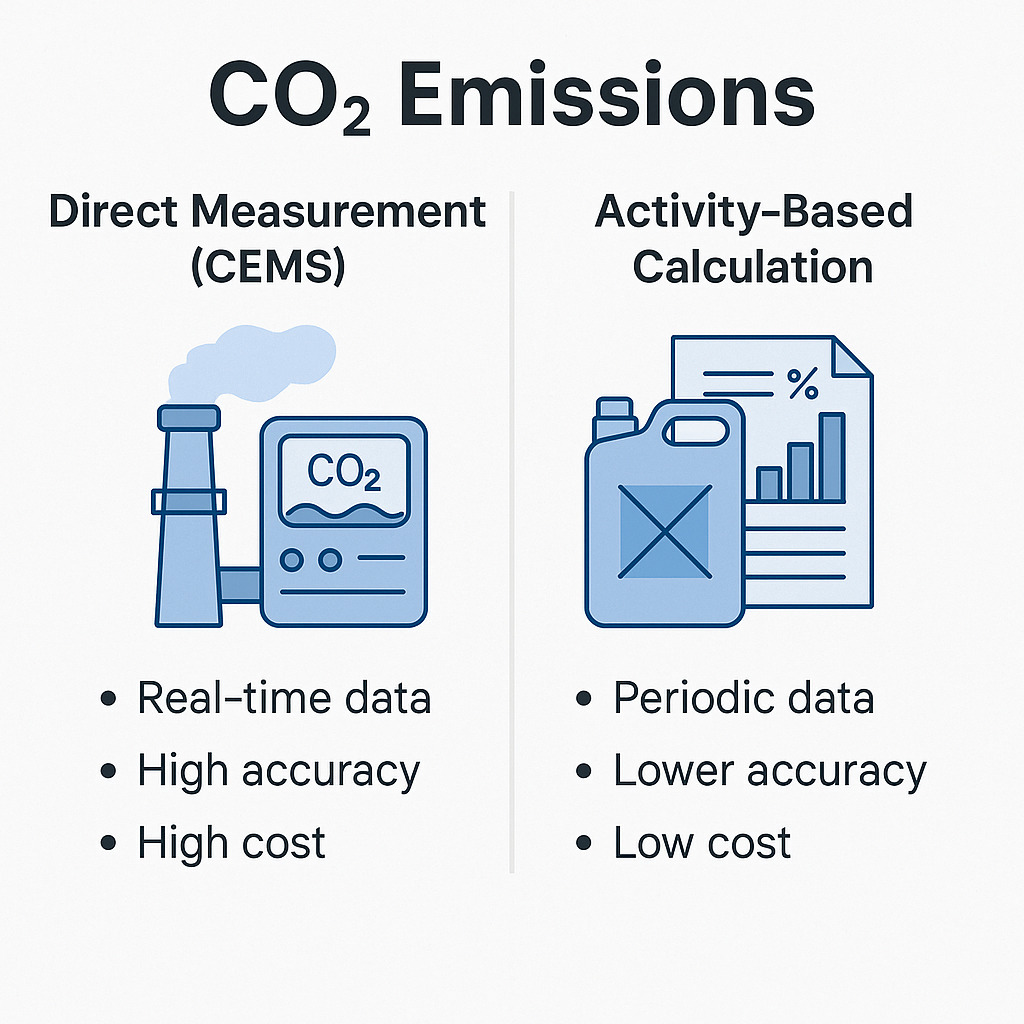
CO₂ Emissions: Direct Measurement vs Activity‑Based Calculation

Introduction Accurate measurement of carbon dioxide (CO₂) emissions is crucial for regulatory compliance and climate initiatives. Two primary approaches are used in industry: direct measurement through Continuous Emissions Monitoring Systems (CEMS), and activity-based calculation methods using data like fuel consumption and emission factors. Below, we compare these methods, highlighting their accuracy, cost, real-time capabilities, treatment …

CO₂ Emissions: Direct Measurement vs Activity‑Based Calculation Read More »

Navigating Data Availability and Disclosure Rules in Europe for Emissions and Sustainability

Introduction As businesses face growing pressure to decarbonize and improve sustainability, data availability and transparency have become critical factors. In Europe, regulatory frameworks are evolving to ensure that companies disclose emissions and sustainability-related data in a standardized and transparent manner. This blog explores key regulations, their impact on businesses, and how organizations can navigate these …

Navigating Data Availability and Disclosure Rules in Europe for Emissions and Sustainability Read More »

Who Decides SBTi Regulations and Why They Matter for Business?

Introduction In the race against climate change, businesses worldwide are being urged to decarbonize. But how do they know what targets to set? Enter the Science-Based Targets initiative (SBTi)—the global authority guiding companies in aligning their emissions reductions with climate science. But who decides these regulations? What makes SBTi’s framework so important? And why should …

Who Decides SBTi Regulations and Why They Matter for Business? Read More »

Understanding SBTi’s FLAG Pathways: A Guide for Carbon Management in the Food Industry

As the urgency to combat climate change intensifies, companies across all sectors are under increasing pressure to set ambitious climate targets aligned with the 1.5°C goal. For businesses in land-intensive industries such as agriculture, food, and forestry, the Science Based Targets initiative (SBTi) has introduced Forest, Land, and Agriculture (FLAG) Pathways — a sector-specific framework …

Understanding SBTi’s FLAG Pathways: A Guide for Carbon Management in the Food Industry Read More »

Harnessing Scenario Analysis for Effective Carbon Emission Management

In an era where sustainability is more than just a buzzword, businesses must adopt proactive strategies to meet increasingly stringent environmental regulations and consumer expectations. One powerful tool leading this charge is Scenario Analysis—a method that allows organizations to model various sustainability strategies, forecast potential outcomes, and make informed decisions for long-term success. What is …

Harnessing Scenario Analysis for Effective Carbon Emission Management Read More »

Microsoft’s Sustainability Efforts: A Deep Dive into Its Emissions Management Software

In today’s rapidly evolving business landscape, sustainability has become a pivotal focus for organizations worldwide. Recognizing the critical need for effective environmental management, Microsoft has developed a suite of tools designed to help businesses monitor, manage, and reduce their carbon footprints. At the forefront of these innovations is the Microsoft Sustainability Manager, a comprehensive solution …

Microsoft’s Sustainability Efforts: A Deep Dive into Its Emissions Management Software Read More »

Investing in the Future: Why Emitrix is Targeting the Food Industry

The global food industry is at a turning point. Contributing over 25% of total greenhouse gas (GHG) emissions, it faces increasing regulatory scrutiny and growing consumer demand for sustainability. Emitrix, a pioneering carbon tracking solution, is seizing this opportunity to revolutionize emissions management within the food sector. But why is the food industry such a …

Investing in the Future: Why Emitrix is Targeting the Food Industry Read More »

Global Investments in Sustainability: Which Countries Are Leading the Charge?

  As climate change intensifies, countries worldwide are ramping up their investments in sustainability to drive the transition toward a greener economy. Governments, businesses, and financial institutions are committing billions of dollars to renewable energy, carbon reduction, biodiversity protection, and circular economy initiatives. But which nations are investing the most in sustainability, and what are …

Global Investments in Sustainability: Which Countries Are Leading the Charge? Read More »

The Rise of Carbon-Neutral AI: Can Artificial Intelligence Solve Its Own Emissions Problem?

Introduction Artificial Intelligence (AI) is revolutionizing industries, from healthcare to finance, but it comes at a hidden cost—carbon emissions. With AI models growing exponentially in size and computation power, their energy consumption is skyrocketing. Ironically, the same technology that helps optimize sustainability is also contributing to global emissions. But what if AI could solve its …

The Rise of Carbon-Neutral AI: Can Artificial Intelligence Solve Its Own Emissions Problem? Read More »

Beyond Carbon: The Rising Focus on Biodiversity in Global Sustainability Efforts

As the world grapples with the mounting climate crisis, a new sustainability frontier is rapidly gaining attention: biodiversity preservation. While carbon emissions and renewable energy have dominated sustainability discussions, the importance of biodiversity is emerging as a critical and interconnected pillar of global environmental efforts. In 2024, governments, corporations, and communities are placing unprecedented focus …

Beyond Carbon: The Rising Focus on Biodiversity in Global Sustainability Efforts Read More »